01 / 03
Distribute
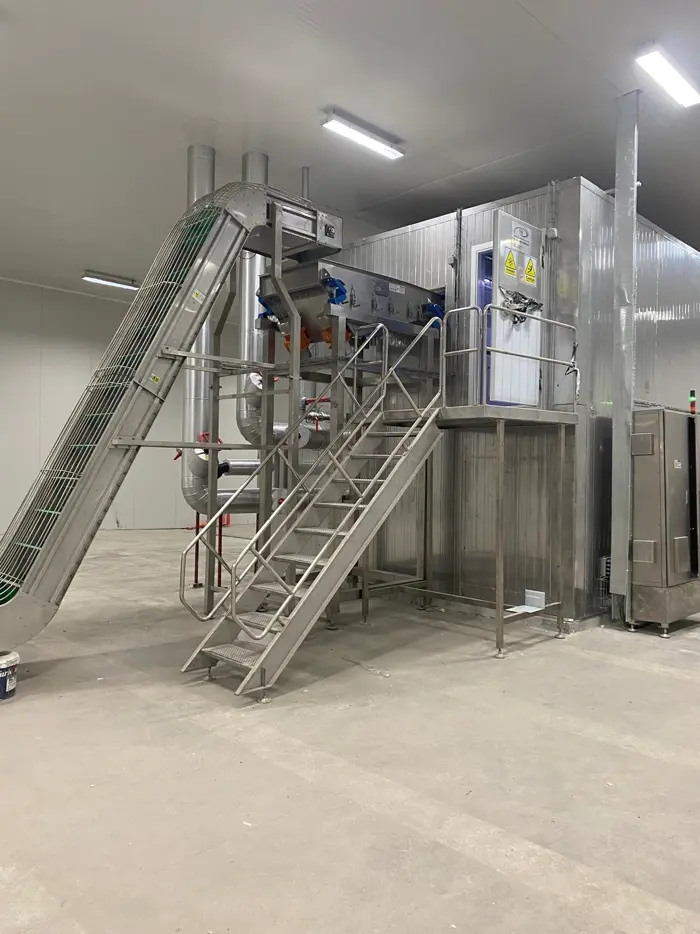
The feed elevator delivers product to the tunnel. An even bed lets air reach the pieces across the width of the belt.
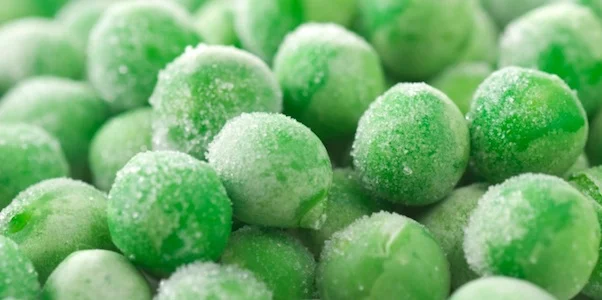
Separate the pieces before they freeze together.
The feed elevator delivers product to the tunnel. An even bed lets air reach the pieces across the width of the belt.
Cold air rises through the mesh. Pulsation helps wet pieces separate while their surfaces begin to freeze.
Look for pieces moving independently. Share the incoming temperature, piece size and target tonnes per hour when sizing a tunnel.
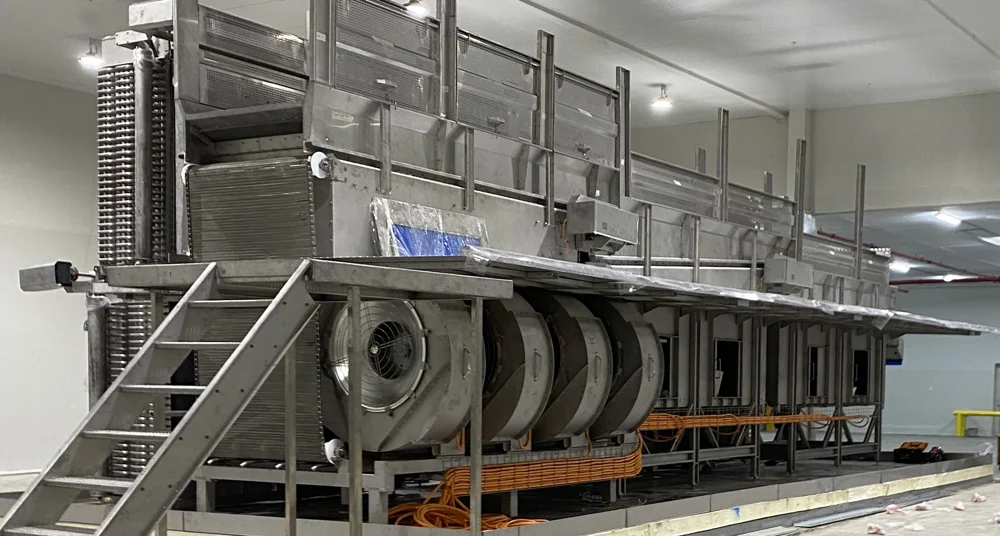
Efes combines two pressure-controlled freezing zones with mechanical pulsation. Air speed, direction and pressure are tuned to the product so pieces remain in motion rather than freezing into clumps.
The product is distributed evenly across the stainless-steel wire belt to create a controllable bed depth.
P1 and P2 chambers manage air velocity and angle through the product bed for staged heat removal.
A momentary pressure change lifts and agitates the product vertically, helping wet or sticky pieces separate.
The product moves quickly through the critical freezing zone before the second stage brings it to target core temperature.
Fast passage through approximately −1°C to −5°C helps limit ice-crystal growth and supports product texture.
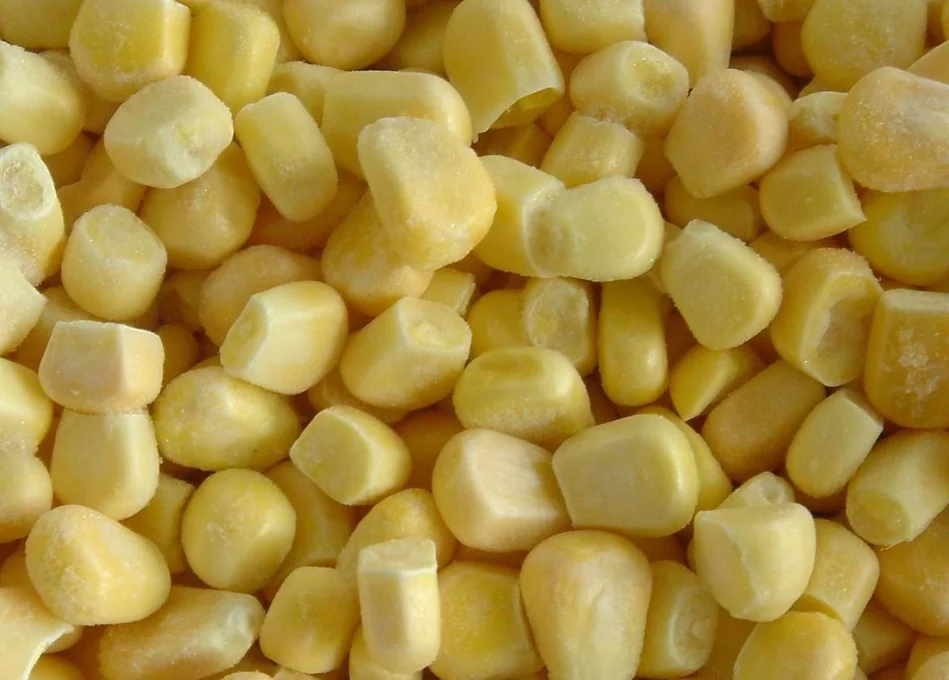
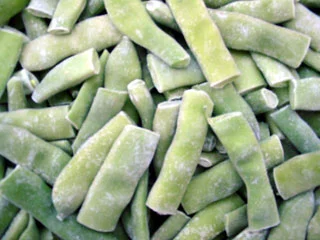
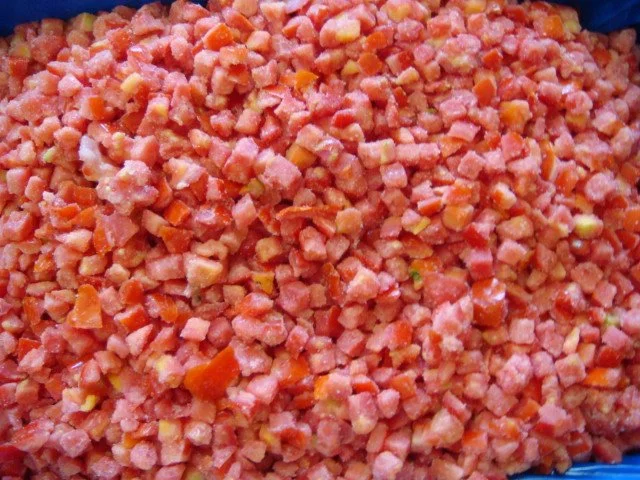
Redler-type beltless elevator and controlled feed distribution.
Fast surface set reduces sticking and supports early separation.
Second-stage residence time brings the product to its target core temperature.
Belt washing, automatic lubrication, defrost and PLC-based operation.
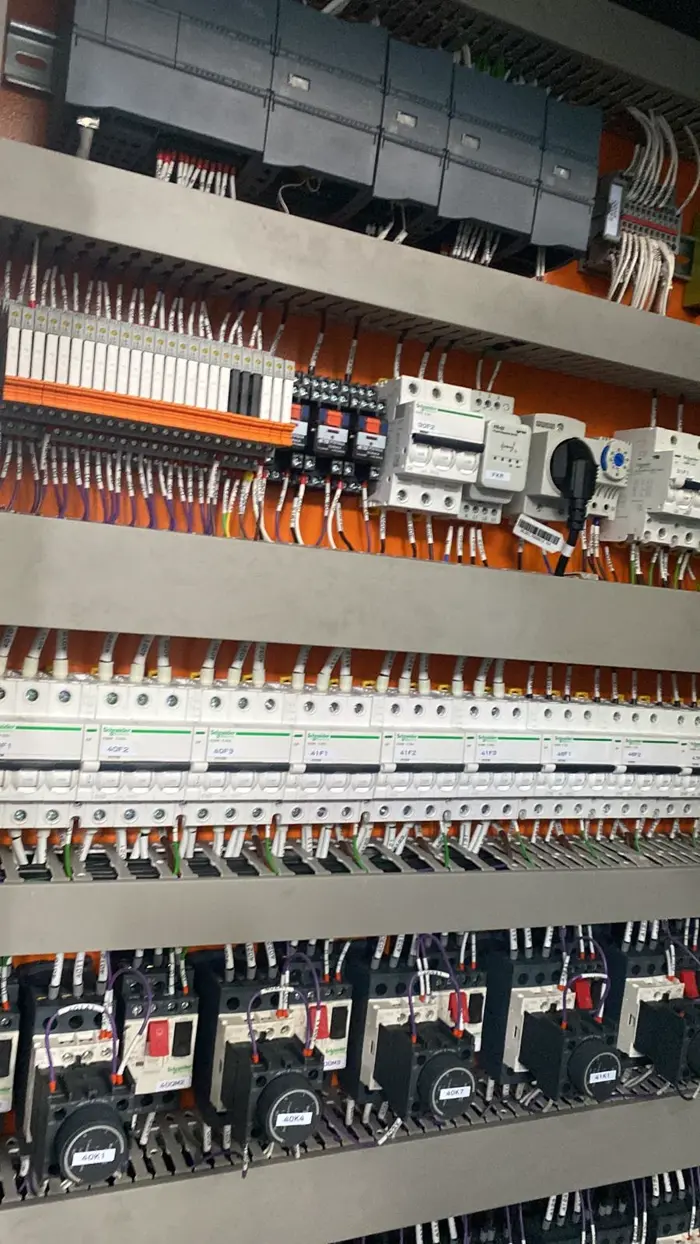
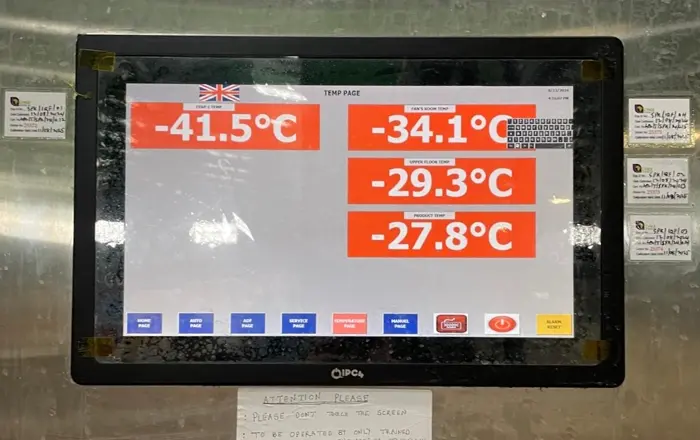
Display readings are process snapshots, not measurements of product core temperature.
Final dimensions, capacity and refrigeration load are engineered for the product and facility.
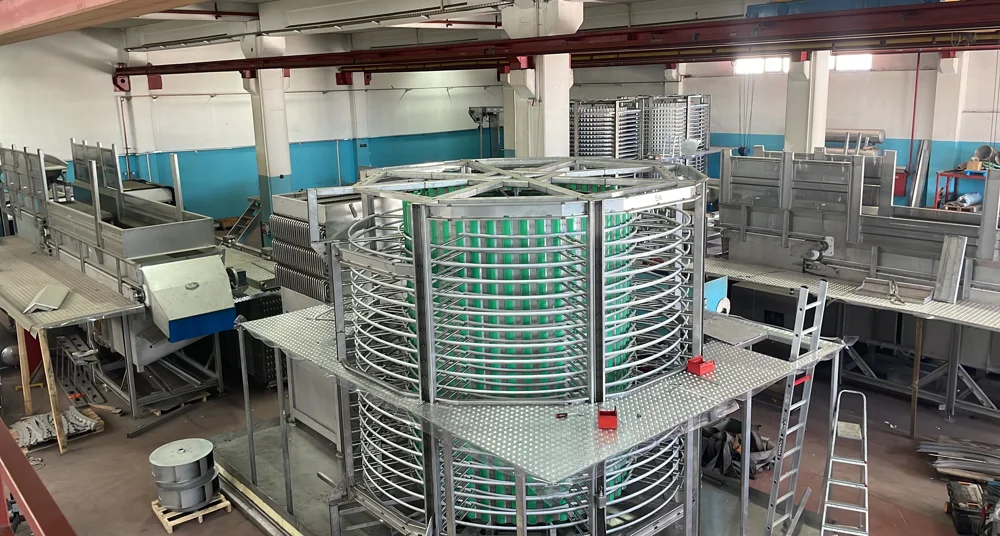 Spiral Freezing Systems
A vertical belt path for shaped foods, fish fillets and products requiring longer residence time.
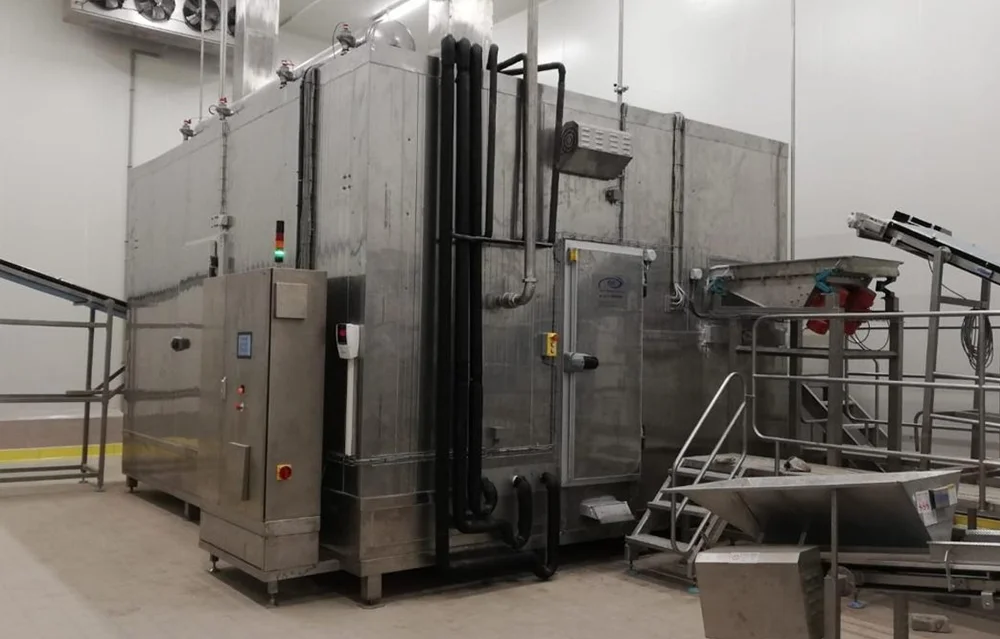 Specialized IQF Systems
Moving-pan IQF systems for small, wet and sticky products, including mozzarella and small seafood.
 Preparation & Handling
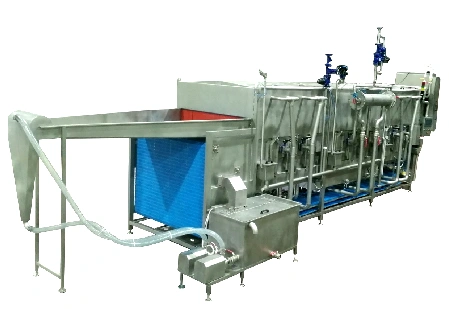
Blanchers, chillers, Redler elevators and dewatering shakers coordinated around your freezer.
For products that must remain individual, cleanly separated and easy to dose after freezing.
Request engineering review